

U.S. President Donald Trump stated that Washington is open to a diplomatic solution with Iran, provided that the agreement completely prevents Tehran from acquiring nuclear weapons and satisfies America’s key allies in the Middle East.
Kabul 24: “If they are happy, we will probably be happy too,” Trump said, emphasizing that any final deal must have the full approval of Saudi Arabia, the United Arab Emirates, and Qatar.
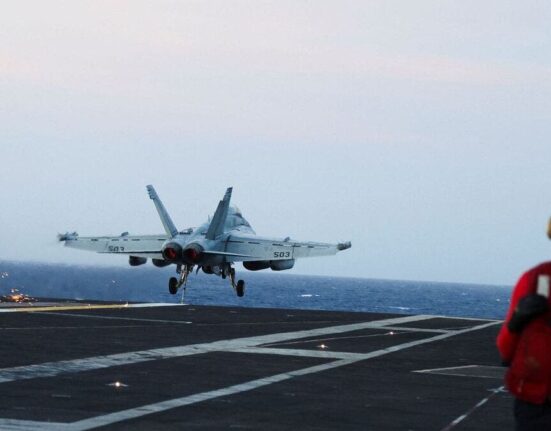
He reiterated that the core U.S. condition remains unchanged: Iran must never be allowed to develop or possess a nuclear weapon.Trump also revealed that a large-scale military strike on Iran, which had been prepared, was postponed following direct requests from the leaders of Saudi Arabia, Qatar, and the United Arab Emirates.
According to the President, these countries asked for a short window of two to three days because they believed a diplomatic agreement was close to being finalized.
This request led to the temporary suspension of the planned attack to allow space for a potential lasting diplomatic resolution. Trump described the decision as a sign of close coordination between the United States and its regional partners, stressing that any agreement must protect the security interests of all concerned parties.
These remarks come amid ongoing tensions over Iran’s nuclear program. The Trump administration has repeatedly warned that it will not tolerate Iran acquiring a nuclear bomb and has kept the military option on the table.
However, the President indicated a clear preference for a diplomatic path if it is effective, verifiable, and fully supported by America’s Gulf allies.Analysts note that the brief postponement of military action has created a narrow window for diplomacy.
The success of any negotiations will depend on Iran’s willingness to accept strict, verifiable limits on its nuclear activities. The explicit backing of Saudi Arabia, the UAE, and Qatar is expected to play a decisive role in the legitimacy and durability of any potential agreement.
Trump concluded his comments by reaffirming America’s strong deterrent power, stating that if a satisfactory deal cannot be reached, the United States is fully prepared to take decisive action.
Nevertheless, current signals suggest that both sides have kept a limited channel for negotiations open, although the window remains narrow and heavily conditioned.