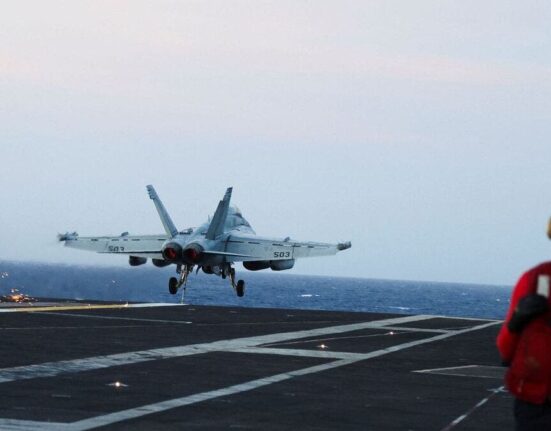


China’s grandest military project, commemorating Japan’s surrender and the end of World War II, is more than a show of force. It signals the resolve of China’s leaders to rewrite history and challenge dominant narratives.
Kabul 24: The prevailing story credits the U.S., Soviet Union, Britain, and France with defeating Germany and Japan, saving the world from evil.
This narrative often ignores the subordinate states of East Asia, the Middle East, and East Africa, whose lands, people, and resources were consumed by the war.
China now aims to contest this story, crafting a new one that reflects its current power.
Its audience is not just Japan, the West’s key security ally in East Asia, but the entire global order.
The West-centric global system, shaped by World War II’s outcomes, is a liberal, rules-based order that privileges the war’s victors.
China’s revisionist stance is not revolutionary or anti-systemic.
China’s revisionist stance is not revolutionary or anti-systemic.
It seeks a dignified seat among global powers while maintaining its governance model and values.
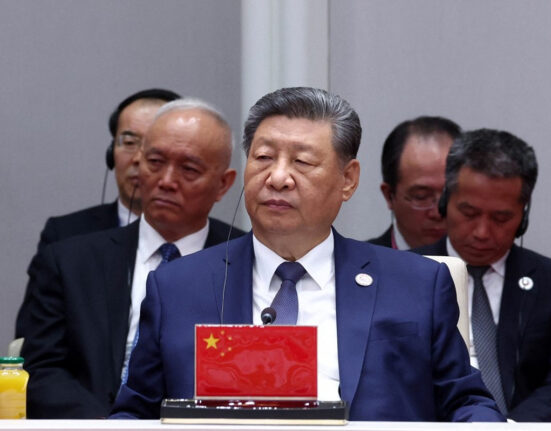
Beijing calls this strategy “multilateralism,” viewing a multipolar world as its path forward.The most striking symbol of this political theater was the clasped hands of Putin, Modi, and Xi at the recent summit.
The India-China-Russia trio, representing nearly three billion people, poses a greater threat to the West than the united communist bloc of the 1950s and 1960s.
This partly accidental success stems from Donald Trump’s missteps and his inconsistent foreign policy.
While Moscow, Beijing, and Delhi harmonize in praising authoritarianism and criticizing democracy, ideological alignment cannot conceal the deep geopolitical rivalry between China and India.
Moreover, the strategic partnership between Beijing and Moscow increasingly favors the former.
Pushing India toward China and Russia’s growing reliance on China due to the Ukraine war and Putin’s sanctions create a zero-sum game that harms the West and benefits Xi Jinping.
A non-liberal, isolationist U.S. president is a gift to China. Someone who undermines democracy at home, disregards international treaties and institutions, and imposes tariffs on allies and adversaries alike cannot inspire trust or hope.
At the Shanghai Summit, recognizing the faltering U.S. global leadership, Xi added a new principle to his existing triad: global governance.
This joins his prior principles of global development, security, and civilization.The China-U.S. rivalry is fundamentally a clash of governance models and social organization.
Beijing’s model blends authoritarian rule with a market economy, while the Washington Consensus combines liberal democracy and free markets.
The Washington Consensus extends to promoting democracy globally, replacing authoritarian regimes with pluralistic, elected systems.
Beijing, however, seeks democracy not within states but in the global arena, advocating that nations follow their own paths without interference. Democracy and human rights are seen as relative, Western values, not universal norms.
Instead of meddling in states’ internal affairs, the global system should be democratized based on true equality among nations.Clearly, Trump, neither a democrat nor a liberal, is an ill-suited champion of the Washington model.
It’s as if a mistake placed him in Washington instead of Moscow, Beijing, or New Delhi.
Despite many variables, this alone could, in the short term, bolster China and its governance model’s appeal.
Yet, Beijing’s challenge to Washington is a long, rocky road. Beyond its political system’s contradictions, China faces economic woes like recession, inflation, unemployment, and a demographic crisis.
The ruling Communist Party’s legitimacy has suffered, prompting aggressive nationalism to compensate.
Escalating threats against Taiwan are part of this strategy.
An attack on Taiwan could become Xi’s Ukraine trap, potentially derailing China’s ambitions at their peak.
Still, Beijing has succeeded in forming an Asian coalition around itself. Except for key U.S. allies like Japan, South Korea, Singapore, and the Philippines, nearly all Asian states attended the Shanghai display.
Salahuddin Khadio