
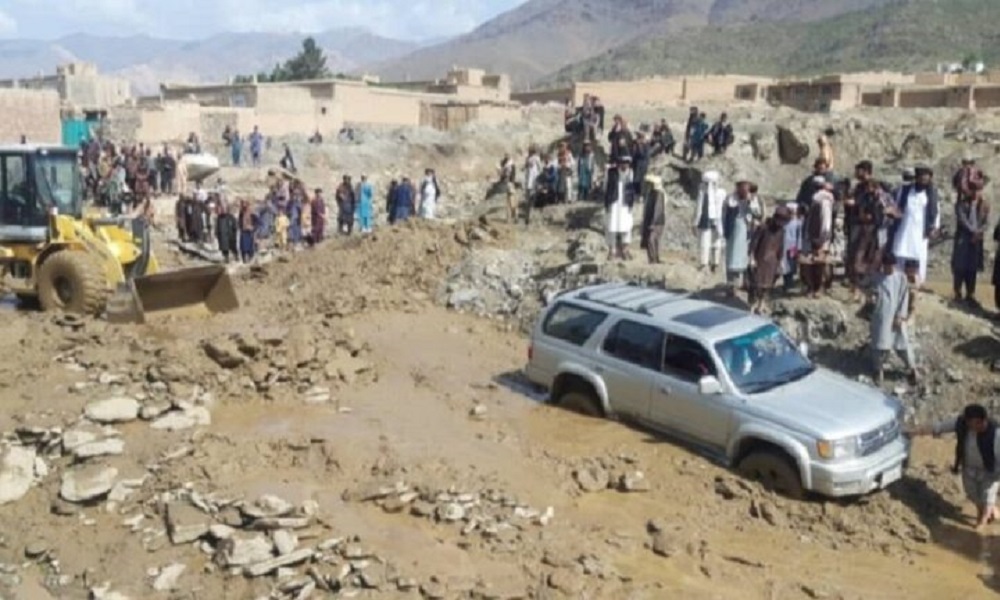
Recent flash floods in southeastern Afghanistan have caused extensive material losses and severely affected thousands of families across Paktia, Paktika, and Khost provinces.
Kabul 24: The floods struck several districts, destroying homes, agricultural lands, livestock, roads, and bridges, and leaving many communities in urgent need of assistance.
According to the National Disaster Management Authority, more than 100 residential houses were either fully or partially destroyed in the affected areas. In Paktia province, particularly in Ahmadabad and Zarmat districts, the floods inflicted significant damage.
Taj Mohammad Hemat, Deputy Spokesperson of the Authority, reported that 47 houses were partially destroyed, 565 jeribs of agricultural land were washed away, and 226 families were impacted.
The situation was even more severe in Paktika province. In the provincial center and districts such as Barmal and Shekin, 16 houses were completely destroyed and 25 others were partially damaged. One mosque was entirely ruined, 10 head of livestock perished, 50 jeribs of farmland and 23 jeribs of orchards were lost, and seven vehicles were damaged.
A total of 60 families suffered losses in this province.Khost province also sustained considerable damage. In districts including Gurbuz, Ali Sher, Zazi Maidan, Nadir Shah Kot, and several other areas, five houses and 20 shops were partially destroyed, 80 jeribs of agricultural land were ruined, and 42 families were affected.
Public roads and several bridges were also damaged or blocked, hindering relief efforts.Flood victims have appealed to the government and humanitarian organizations for immediate help.
Many have lost not only their homes but also their farmland, livestock, and other belongings, which were their primary sources of livelihood. They emphasize the urgent need for emergency food aid, temporary shelter, cash assistance, and long-term reconstruction support.
Residents are also calling for the construction and expansion of floodwater channels and better early warning systems to prevent future disasters.
Experts attribute the severity of the floods to climate change, intense and sudden rainfall, and insufficient watershed management in mountainous regions.
They stress the importance of investing in small-scale dams, proper drainage systems, afforestation, and community training on disaster preparedness.
While some initial aid from government agencies and relief organizations has reached the affected areas, victims say the assistance is far from sufficient.
With winter approaching, the situation could worsen without sustained support for rebuilding homes and restoring agricultural fields.
The National Disaster Management Authority stated that detailed damage assessments are ongoing and efforts are underway to coordinate more comprehensive relief.
This latest disaster highlights the critical need for improved disaster risk reduction strategies and infrastructure development in Afghanistan’s vulnerable southeastern provinces.