
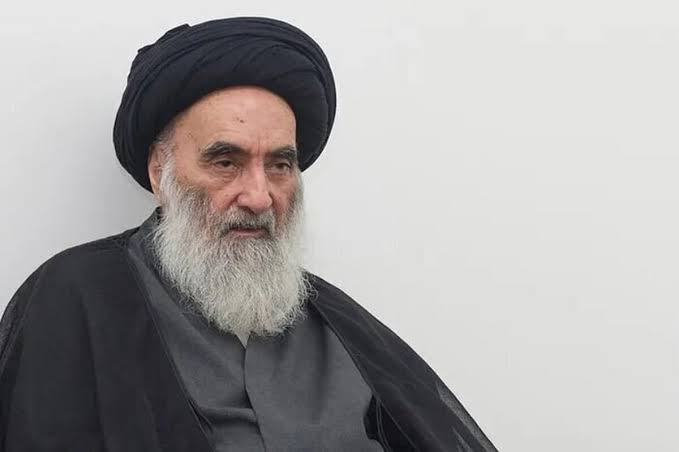
Ayatollah Ali Sistani, one of the most prominent Shiite religious authorities residing in Najaf, Iraq, has issued a strong statement condemning Israel’s recent attack on Iran.
Kabul 24: The statement, which has garnered significant attention regionally and internationally, avoids direct reference to alleged threats by Israel and the United States against Iran’s Supreme Leader, Ayatollah Ali Khamenei, but delivers a stern warning about the consequences of hostile actions.
In his statement, Ayatollah Sistani firmly declared, “I unequivocally warn that any such criminal act, beyond blatantly violating religious and moral principles and clearly breaching international norms and laws, will have grave consequences for the entire region.” He emphasized that such actions could “potentially lead to a complete loss of control and widespread chaos,” exacerbating the suffering of the region’s peoples and severely endangering the interests of all parties involved. This caution reflects the cleric’s deep concern over escalating tensions in a region already plagued by conflicts and crises.
Ayatollah Sistani also called on the global community to act swiftly to halt what he described as an “unjust war.” In the closing remarks of his statement, he urged “all influential international institutions and governments worldwide, particularly Islamic governments,” to exert maximum effort to find a peaceful and just resolution to Iran’s nuclear issue in accordance with international legal frameworks. This appeal underscores Ayatollah Sistani’s influential role as a proponent of peace and dialogue.
The statement comes at a time of heightened tensions in the Middle East, with Iran-Israel relations strained by recent attacks and mutual accusations over Iran’s nuclear program.
Ayatollah Sistani’s pronouncement, given his significant spiritual and political influence in the Islamic world, could serve as a catalyst for increased pressure on conflicting parties and international bodies to de-escalate.
His call for diplomacy highlights a commitment to regional stability and justice in the face of aggressive actions, reinforcing his stature as a voice for moderation and peace in a volatile region.