
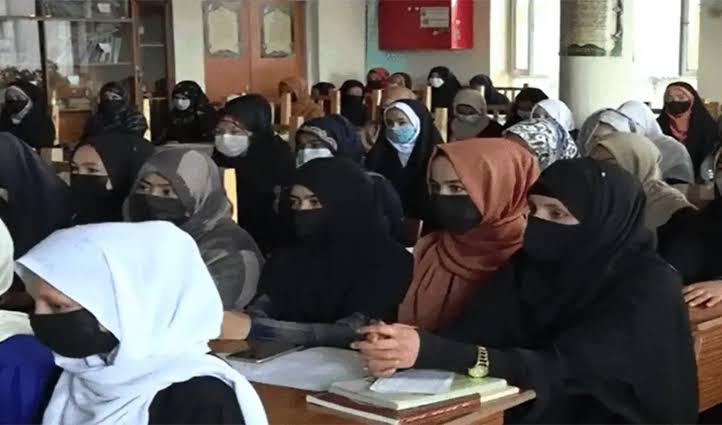
Ghazni Directorate of Education has announced that approximately 20,000 female students are currently enrolled in 250 religious schools across the province.
Kabul 24: In addition, 23,000 other girls have access to education through 950 local classes in various parts of Ghazni. These figures reflect significant efforts to expand girls’ education in the province, despite ongoing challenges in developing educational infrastructure.
Mir Nasir Ahmad Hussaini, head of Ghazni’s Education Directorate, told Tolo News: “We currently have around 250 active religious schools in Ghazni province, where nearly 20,000 girls are pursuing their education.
Additionally, with the establishment of 950 local classes, more opportunities for girls’ education have been provided in remote areas.” These initiatives demonstrate a strong commitment to improving literacy and access to education for girls, particularly in areas with previously limited educational facilities.In this regard, the construction of a new girls’ religious school in Khwaja Omari district of Ghazni has recently begun, funded by local residents and private contributions.
This school, the fifth of its kind in the district, will be built with a budget of approximately two million Afghanis and will have the capacity to accommodate 120 female students upon completion.
This project is not only a significant step toward strengthening educational infrastructure but also highlights the active participation of the local community in improving education.Mutiullah Farooqi, the education officer of Khwaja Omari district, explained: “The land for this school, covering seven and a half acres, was donated by the local community.
The school building will include six classrooms, an administrative office, a water well, a storage room, a courtyard, and modern sanitation facilities.” These amenities will enable students to study in a suitable and standardized environment.
However, residents of Ghazni continue to express concerns about the lack of educational facilities. Asadullah, a local resident, told Tolo News: “In the past, due to the lack of proper educational spaces, girls’ access to education was very limited.
The construction of this school has given us great hope.” Mohammad Azim, another resident, highlighted the shortage of textbooks and adequate infrastructure in newly established schools, urging authorities to address these issues.
The Ministry of Education has reported that over the past four years, more than 1,100 schools have been constructed across Afghanistan. Nevertheless, the need for greater support to provide educational resources, such as books and equipment, remains pressing in many areas.
Local and governmental efforts in Ghazni are a testament to the push toward addressing these gaps and creating equal educational opportunities for girls.These initiatives are particularly significant in a province like Ghazni, which faces infrastructural and economic challenges.
The community’s involvement in building schools and supporting girls’ education reflects growing awareness of the importance of literacy and its role in sustainable development.However, sustaining this progress requires increased collaboration between government institutions and international organizations to provide funding, equipment, and trained educators.
It is hoped that with continued efforts, more girls in Ghazni and across Afghanistan will gain access to quality education, paving the way for a brighter future for themselves and their communities.