
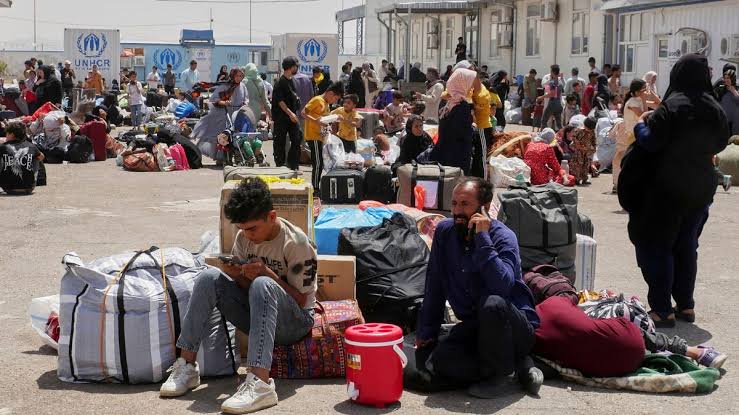
Local officials in Herat province have reported a significant increase in the forced deportation of Afghan migrants from Iran in recent days.According to statistics released by the Migration Affairs Directorate at the Islam Qala border crossing, more than 2,000 Afghans are entering Afghanistan from Iran every day.
Kabul 24: Abdul Ghani Qazi Zada, the registration officer at the Migration Affairs Directorate in Islam Qala, stated: “Previously, the number of forced returnees was lower and most returns were voluntary.
However, deportations have now surged, while the number of voluntary returns has noticeably declined.”This shift comes as Iran has adopted stricter immigration policies toward undocumented Afghan migrants, especially since 2025.
Iranian authorities cite national security concerns, the need to reduce public expenditures, and efforts to regulate the labor market as the main reasons for the intensified deportations.
With an estimated Afghan migrant population in Iran exceeding six million, issues related to social services, employment, and security have prompted a more aggressive approach to removals.
In recent months, particularly following regional tensions, the pace of deportations has accelerated. Reports from international organizations such as the International Organization for Migration (IOM) and the UN High Commissioner for Refugees (UNHCR) indicate that hundreds of thousands of Afghans have been expelled in relatively short periods.
Although the current daily figure at Islam Qala stands at over 2,000, this volume continues to place considerable strain on border facilities and humanitarian services in Herat.
Returning migrants often face difficult conditions. Many, after living in Iran for years, return with few possessions and limited resources.
Afghanistan’s own fragile economy and overstretched humanitarian system are struggling to absorb this large-scale influx. Families, children, and women are among the most vulnerable groups, requiring urgent assistance in shelter, food, healthcare, and reintegration support.Local authorities in Herat have attempted to coordinate with relevant agencies to establish temporary reception centers and provide basic aid.
However, capacities remain limited. International aid organizations have warned of a growing humanitarian crisis and called for increased support for the returnees.The ongoing wave of forced deportations not only affects the lives of individual migrants but may also have long-term economic and social consequences for both countries.
Analysts warn that continued mass deportations without joint planning and management could heighten tensions and create new challenges in bilateral relations.Overall, the sharp rise in forced removals of Afghan migrants from Iran reflects a clear shift in the western neighbor’s migration policy, directly impacting hundreds of thousands of Afghan families.
Afghan officials emphasize the need for greater international assistance and closer coordination with Iran to ensure that returns are carried out in a humane manner with minimal hardship.