
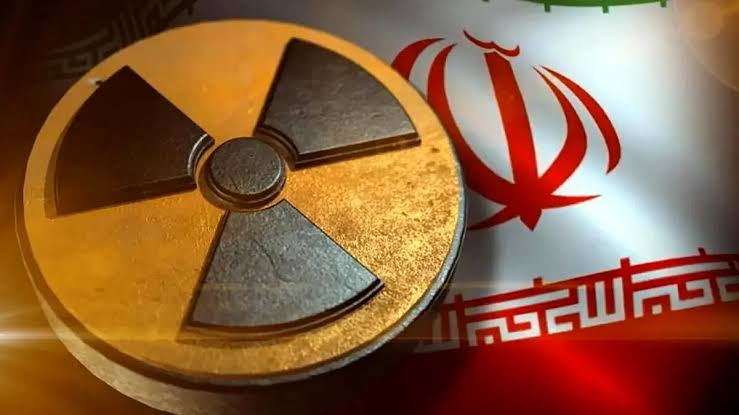
The European Troika has activated the trigger mechanism. “Troika,” a Russian term meaning a three-horse carriage, offers an intriguing metaphor rooted in its etymology for the actions taken today by Britain, France, and Germany.
Kabul 24: These former global powers, now navigating a transforming world and facing emerging, vigorous powers, are compelled to follow the lead of the United States.
It is as if the U.S. and Israel, holding the reins of Iran’s nuclear dossier, are riding Europe’s three-horse carriage, galloping toward Chapter VII of the UN Security Council!The agency of an aging and weary Europe on the international stage is scarcely possible without substantial reliance on the U.S. With this move, Iran is thrust back to the early 2010s, to the era of comprehensive UN Security Council sanctions.
Although U.S. unilateral sanctions already target nearly all key sectors of Iran’s economy, the reinstatement of past resolutions signifies their consolidation within a robust legal framework, making escape from them far more challenging.
However, significant differences exist compared to thirteen years ago. In the pre-JCPOA era, sanctions were primarily seen as an alternative to war. Now, formal sanctions are imposed on a program under heavy assault, with no clear assessment of its actual status.
Moreover, Iran’s economy and airspace have been equally battered, with their resilience significantly diminished. Likewise, Iran’s regional influence and the cohesion and strength of its proxy forces are not what they once were.
In this context, a new nuclear agreement, even with some tactical concessions, could hardly be disadvantageous for Iran.
So why did Iran allow matters to escalate to this point, rejecting the extension of the trigger mechanism and further negotiations with Europe? Likely due to the absence of a clear negotiating agenda.
The West, perceiving Iran’s relatively weakened position, is likely aiming for a comprehensive agreement that encompasses Iran’s missile capabilities and the role of its proxy forces.
Iranian missiles have breached Israel’s defense shield, posing a tangible threat to Western nations. Similarly, Shahed drones, wielded by Russia in the Ukraine conflict, have reinforced this perception.
Furthermore, Iran’s indirect control over the strategic Bab al-Mandab strait through its Houthi allies has created significant new geopolitical constraints.Such a broad and ambitious agenda, tantamount to geopolitical suicide, is not something Iran would entertain. At present, it seems unlikely that the West envisions negotiations in any other terms.
This wide gap suggests that the current deadlock will persist, and the thirty-day deadline set by the European Troika is unlikely to alter the situation. Iran finds itself in a critical and fateful position.
Salahuddin Khadiw