
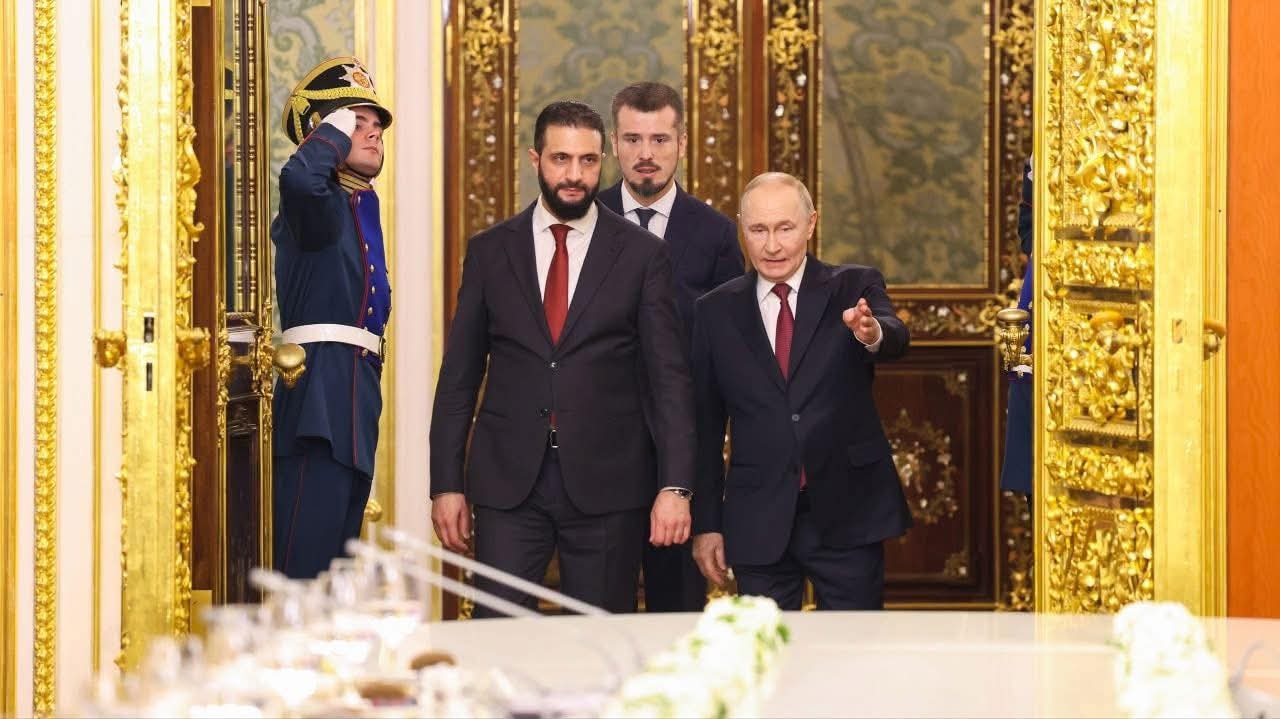
Undoubtedly, this is a remarkable moment in Syria’s history. Assad and Jolani, sworn enemies, are both guests of Putin in Moscow.
Kabul 24: Of course, in Russia’s political tradition, this is not entirely unprecedented. During the Soviet era, it often happened that leaders of satellite states suddenly fell out of favor, and with a nod from the Kremlin, they were replaced by someone else. Sometimes, a leader of a “brother” party would receive an order of dismissal during a trip to Moscow, forced into involuntary residency in Russia and barred from returning to their homeland.
The closest example is the removal of Babrak Karmal, the former president of Afghanistan, during a trip to Moscow by Soviet decree, replaced by Dr. Najibullah.Apparently, today Russia has stripped this old tradition—simultaneously hosting a deposed leader and an incumbent one—of its ideological baggage, aligning it with the demands of the modern era.
This is likely something Iranian authorities are observing with wide-eyed astonishment.Russia and Iran were two countries that actively supported the Assad government during Syria’s civil war. One could even argue that Russia’s indiscriminate and widespread bombings caused the most destruction and casualties in Syria.
However, from the outset, there was a significant difference between Tehran and Moscow. Russia never concealed its strategic interests, particularly its two naval and air bases in Syria.
Iran, on the other hand, wrapped its geopolitical aims and tangible objectives in a cloak of ideology.
It reached a point where Iran’s media narrative and prevailing rhetoric often overshadowed the core issue.
In the official narrative, by invoking religious accounts and ideological symbolism, Syria was transformed into yet another battleground of good versus evil. The secular, Ba’athist regime in Damascus was portrayed as a saintly figure, standing alone and oppressed against the encirclement of Hebrew and Arab devils.
This led to the new rulers’ hostility toward Iran being far greater than toward Russia in the early days after Assad’s fall.The primary message of the above image, however, is the rejection of ideological and idealistic portrayals of political conflicts, emphasizing their basis in interests.
It is not far-fetched that Moscow might trade its long-time ally, Bashar Assad, for a few economic contracts and territorial concessions.
For Moscow, it doesn’t matter what ideology governs Damascus! If the presence of a Salafi jihadist in the People’s Palace offers the same benefits as a Russophile Ba’athist, what difference does it make?Many readers may not recall how, a quarter-century ago, Putin rose to power.
Comrade Vladimir rode the wave of Islamophobia following al-Qaeda’s attacks worldwide, coinciding with several terrorist attacks in Chechnya and Dagestan, hammering his stake into the Kremlin’s power structure.
In the eyes of most Russians, Putin was the savior who came to rescue Russia from the chaos of the nineties and the so-called “Islamic terrorism” that was threatening to engulf security entirely.
Just a few years later, Putin transformed from the sworn enemy of Islamists to their ally. From Hezbollah and Hamas to the Houthi movement and the Taliban, all gradually joined Moscow’s circle of collaborators.
Ahmad al-Sharaa is not the first Islamist leader to be welcomed in the Kremlin. Iran’s rooster, however, always has one leg!
Salahuddin Khediu